
Historical educational analysis. Updated 29 October 2026. Events and quoted market figures refer to their dated source periods; no live trading signal is implied.
Two assets, not two interchangeable safe havens
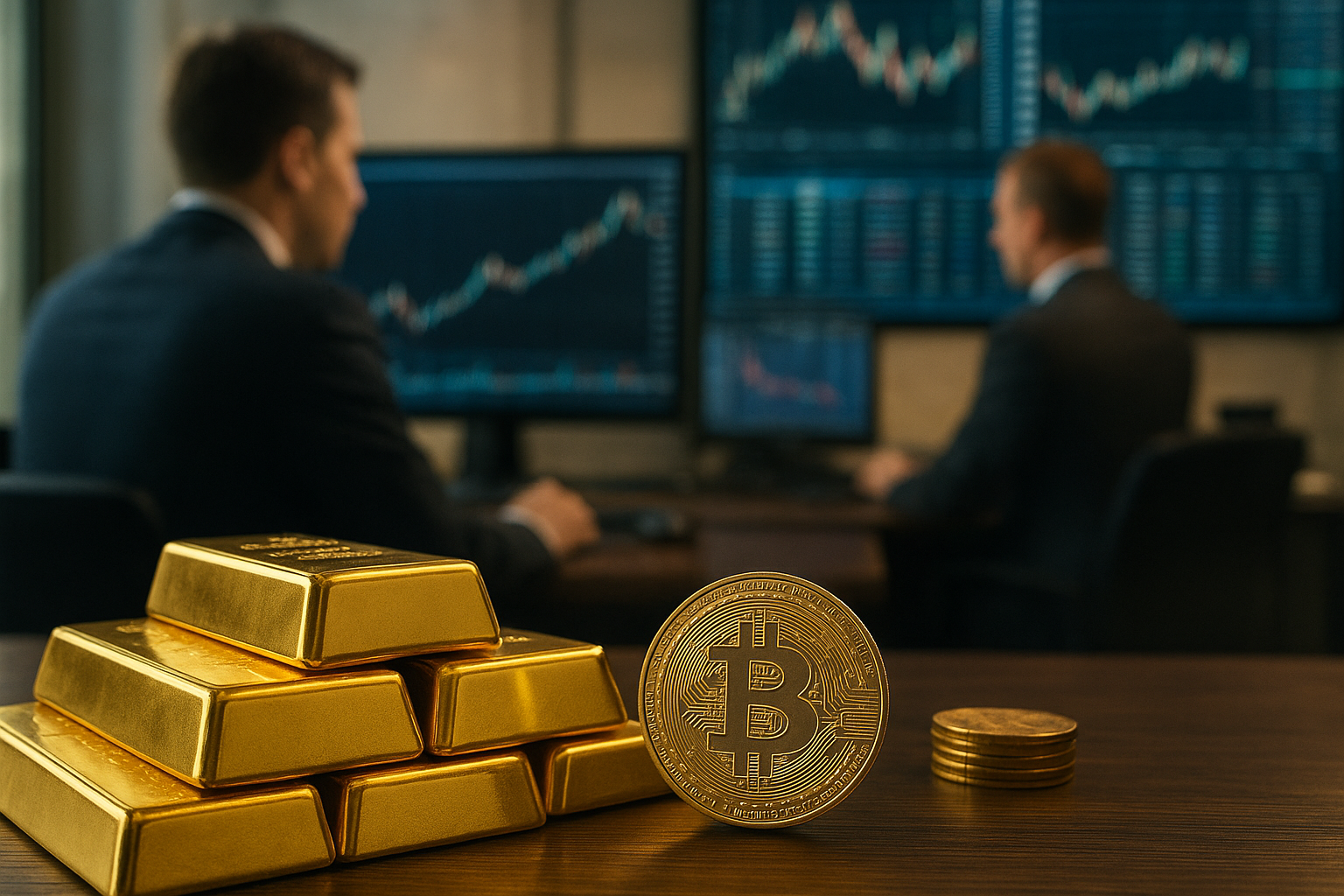
Gold is a physical commodity with jewellery, industrial, central-bank and investment demand. Bitcoin is a digital asset with issuance and transaction rules defined by its protocol and an asset market driven by different participants. Calling both a ‘hedge’ does not mean they must rise together when the same headline breaks. The original article’s claim that gold directly drives Bitcoin prices was not supported.
Correlation is a measurement, not a cause
Correlation measures whether two return series tend to move together during a selected period. It ranges from -1 to +1; zero indicates no linear relationship during the sample. A World Gold Council historical study found gold and Bitcoin correlations varied rather than remaining consistently positive, and highlighted different behaviour during equity-market declines. This is historical research, not a guarantee about 2026.
How the calculation can mislead
Suppose Bitcoin rose 8% during one month while gold rose 2%. That observation alone proves nothing about their statistical relationship. Even a six-month correlation computed from six monthly points may be unstable; a 90-day rolling correlation based on daily returns can also change rapidly. Compare returns measured in the same currency and date window; avoid correlating raw price levels, which can produce misleading results because long-run trends are different.
Custody, liquidity and leverage differ
Physical gold introduces authentication, storage, shipping and dealer buy-back spreads. A gold ETF adds fund fees, custody arrangements and exchange trading hours. Bitcoin exposes holders to wallet-key loss, exchange/custody risk, blockchain network conditions and price volatility. Gold CFDs and crypto derivatives add margin and forced-liquidation risk. Comparing ‘gold versus Bitcoin’ without specifying these wrappers conceals the risks that a beginner actually faces.
What to watch instead of an invented trading signal
For gold, monitor real yields, the dollar, investment flows and central-bank demand alongside price behaviour. For Bitcoin, consider liquidity, exchange flows, risk-asset sentiment and regulatory developments while recognising that no single indicator is definitive. Treat the two assets as separate positions in any risk plan, then study whether their measured return relationships change during market stress. A headline about gold is not automatically an instruction to trade Bitcoin.
Do correlations hold during a crisis?
Not necessarily. Investors who hold Bitcoin as a risk asset may sell it to raise cash at the same time others buy bullion for liquidity or diversification. There can also be periods when both instruments are liquidated in a broader funding shock. The term ‘safe haven’ should therefore be tested against a specified risk episode and a consistent comparison asset. The World Gold Council studies linked below examine historical differences but cannot predict future crypto or gold behaviour.
A better way to test the relationship
Collect gold and Bitcoin daily closing prices using the same timezone and compute daily percentage changes. Calculate rolling 30-day and 90-day return correlations and compare how each performed during large equity drawdowns. Correlating two upward-sloping raw price series can produce misleading associations caused by trends and the common quotation currency. Even a strong 90-day correlation is not evidence that gold causes Bitcoin to move, and using leveraged products introduces distinct margin and liquidation risks.
Sources and editorial method
Claims are anchored to the dated references below. Research reports and press statements are not substitutes for account-specific advice or independently verified live execution data.
- World Gold Council research on gold, Bitcoin and changing correlations
- World Gold Council analysis of gold and crypto under equity stress
Financial education only. Gold prices and leveraged instruments involve losses; no return or market-direction guarantee is offered.